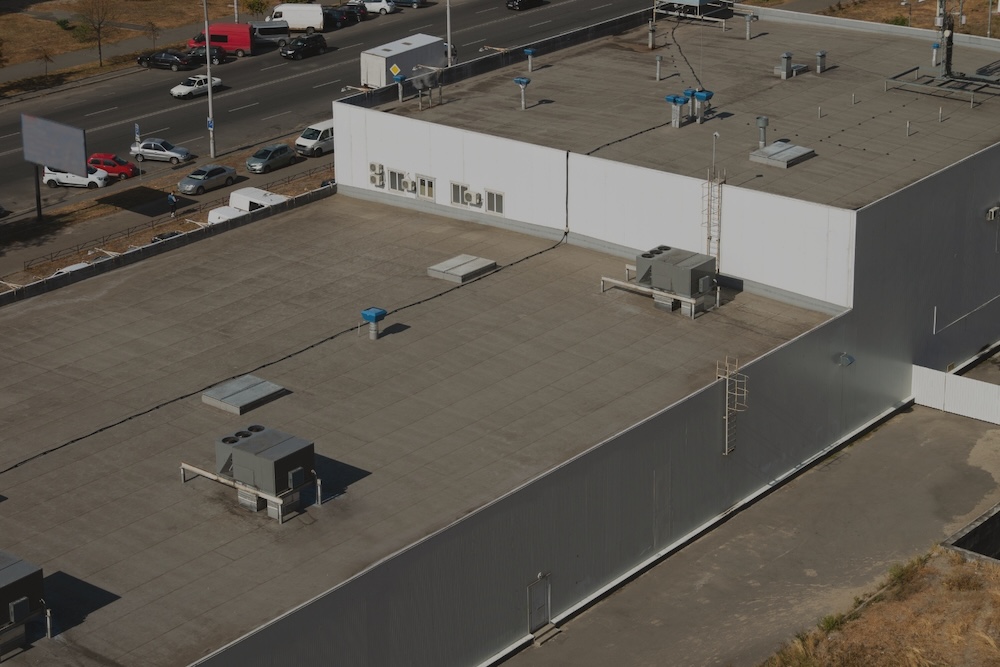
A commercial inspection is a full, systems-level review of a commercial building’s condition, from the roof and structure down to the electrical, plumbing, HVAC, and life-safety systems, documented in a report you can act on before you buy, lease, or refinance.
At CFBI Commercial, our licensed inspectors have performed thousands of these assessments across Florida since 1988. If you have a commercial property inspection coming up, here is exactly what happens, what inspectors check, how long it takes, and how to prepare.
What Is a Commercial Inspection?
A commercial inspection is a professional, visual evaluation of a commercial building’s major systems and components performed to document their condition and flag deficiencies.
It is the core of real estate due diligence for buyers, investors, lenders, and property managers. Unlike a home inspection, which follows a single state standard, commercial work follows the International Standards of Practice for Inspecting Commercial Properties (ComSOP), a flexible baseline that the inspector tailors to the property type.
You can read more about these standards through the Certified Commercial Property Inspectors Association.
A commercial inspection tells you three things: what condition the building is in today, which deficiencies or safety hazards need attention, and what repair or maintenance costs you may be facing.
That information lets a buyer or investor negotiate from a position of strength and move forward with confidence.
Who orders a commercial inspection? Buyers and investors ordering one as part of due diligence make up the largest group, but they are far from the only clients.
Property managers use inspections to plan maintenance and capital budgets, landlords and tenants rely on them to document condition at the start and end of a lease, and lenders often require a condition report before approving financing. Whatever the reason, the goal is the same: replace guesswork about the building with documented facts.
What Does a Commercial Inspection Cover?
A commercial inspection covers every major system and component of the building, inside and out. The exact scope depends on the property type, but a thorough inspection of an office, retail center, warehouse, or multi-tenant building typically includes the following.
Building systems and components
| System/area | What the inspector evaluates |
|---|---|
| Roof and roofing | Covering condition, age, drainage, ponding, flashing, and leak evidence |
| Structure and foundation | Structural integrity, cracks, settlement, and load-bearing elements |
| Building envelope | Exterior walls, windows, doors, sealants, and moisture intrusion |
| Electrical systems | Panels, wiring, capacity, and safety hazards |
| Plumbing | Supply, drainage, water heaters, and leaks |
| HVAC | Heating and cooling equipment, age, and ventilation |
| Life-safety systems | Fire alarms, extinguishers, sprinklers, and marked exits |
| Interior | Ceilings, floors, walls, and finishes |
| Site and grounds | Parking lots, drainage, walkways, and lighting |
| Accessibility | ADA-related elements such as ramps, entrances, and restrooms |
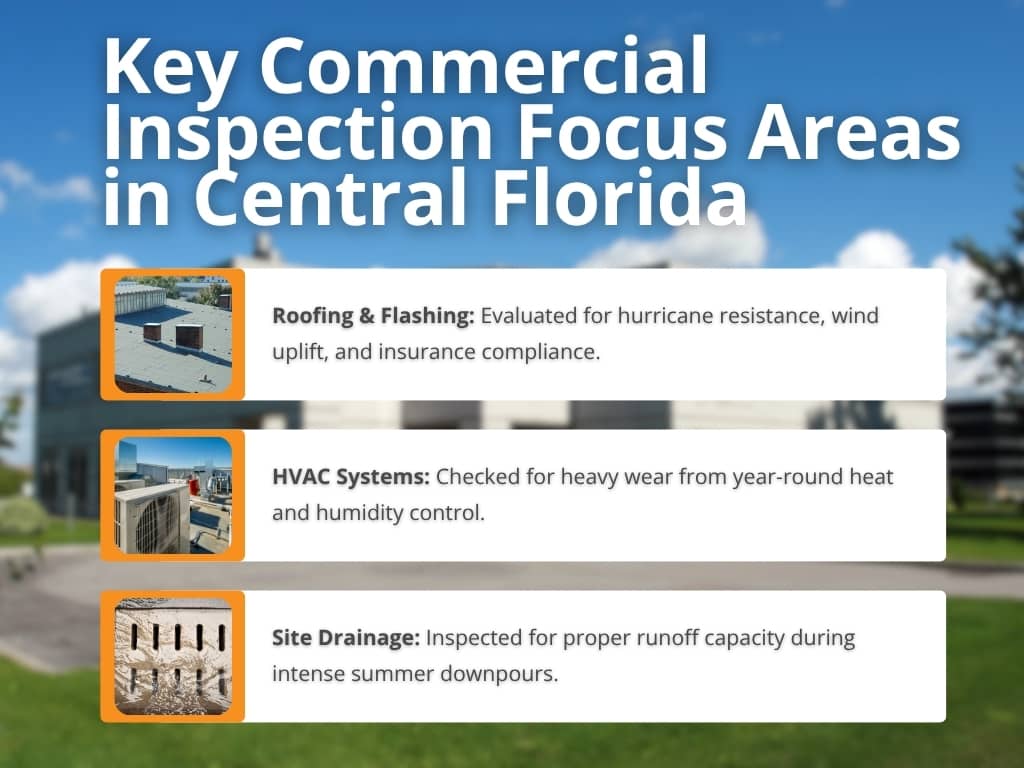
In Central Florida, a few of these items carry extra weight. Roof age and covering condition drive insurability in a hurricane-exposed market, and HVAC systems work hard in year-round heat and humidity, which also raises the risk of moisture intrusion and mold.
Drainage and site grading matter too, since heavy summer storms expose any weakness in how a property sheds water. A good inspector who knows the Orlando market looks closely at the systems most likely to cost you money in this climate.
How the Commercial Inspection Process Works
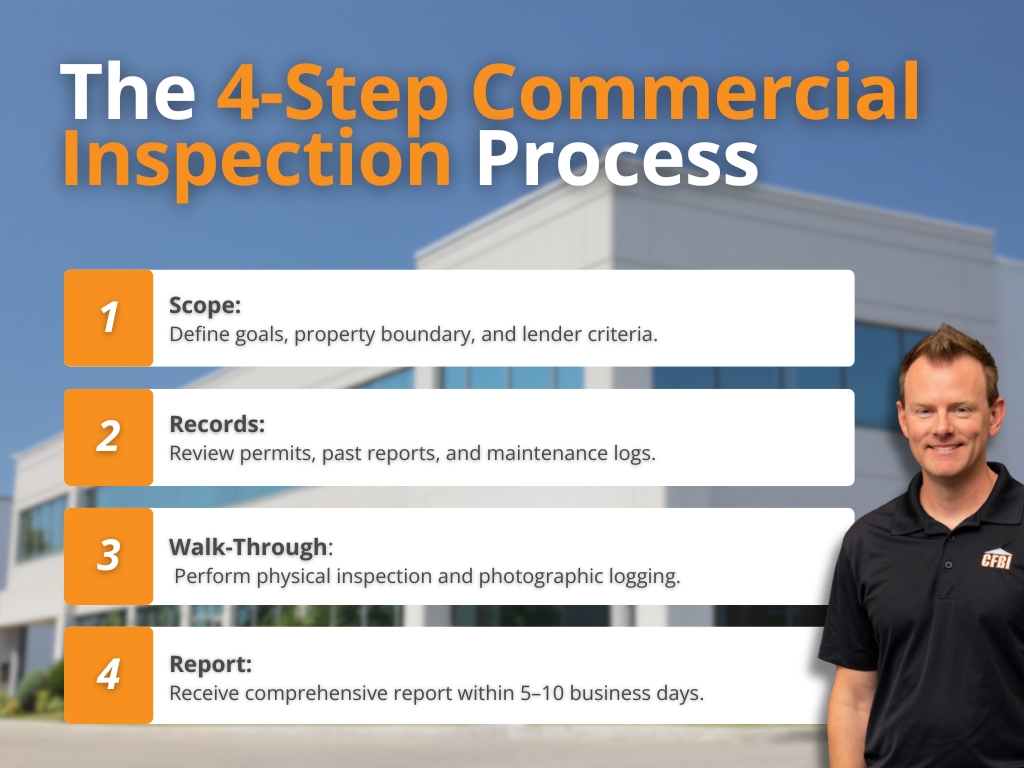
The commercial inspection process runs in four clear stages, from defining the scope to delivering the report. Knowing the sequence helps you prepare and keeps the transaction on schedule.
Step 1: Define the scope
You and the inspector agree on what will be inspected based on the property type, your goals, and any lender requirements. A pre-purchase walk-through of a small retail unit looks very different from a full assessment of a multi-building industrial site.
Step 2: Document review
The inspector reviews available records: prior inspection reports, permits, maintenance logs, floor plans, and warranties. These documents reveal history that a visual inspection alone cannot, such as recurring repairs or unpermitted work.
Step 3: On-site walk-through
The inspector physically examines each system, photographs conditions, and notes deficiencies. For larger properties, this can involve a full team and multiple days on site.
You are welcome to attend, and it is one of the best ways to understand the building you are buying.
Step 4: The inspection report
You receive a written report, usually within 5 to 10 business days, detailing findings, photos, and recommended repairs or further evaluation.
This is the deliverable you take to the negotiating table or hand to your lender. A strong report separates urgent safety hazards from routine maintenance and flags any system that needs a specialist’s second look, so you know where to focus your dollars.
Our inspectors, including InterNACHI Certified Master Inspectors on the CFBI Commercial team, write reports built to support a real business decision, not just check a box.
You can help the inspection go smoothly by preparing a few things in advance: gather permits, prior reports, and maintenance records, make sure the inspector has access to the roof, mechanical rooms, and every tenant space, and confirm the utilities are on so the inspector can test every system.
A little preparation shortens the timeline and produces a more complete report.
How Long It Takes and What It Costs in Florida
A typical commercial inspection takes a few hours to a few days on site, and the report follows within one to two weeks. Cost and duration scale with the building’s size, age, and complexity.
The ranges below are industry norms for guidance; ask for a quote based on your specific property.
| Property size | Typical on-site time | Typical report turnaround | Typical cost range* |
|---|---|---|---|
| Small (single unit, under 5,000 sq ft) | 2–4 hours | 3–5 business days | Low four figures |
| Medium (5,000–50,000 sq ft) | 4–8 hours | 5–7 business days | Four figures, rising with size |
| Large / multi-building | 1–3 days | 7–10 business days | Custom quote |
*Pricing is often set hourly, as a flat fee, or by square footage. Confirm current figures with your inspector.
Commercial Inspection vs. Property Condition Assessment
A commercial inspection and a Property Condition Assessment (PCA) overlap but are not the same thing. A standard inspection follows ComSOP and gives you a point-in-time picture of condition.
A PCA follows the ASTM E2018 standard, is more heavily documented, and forecasts long-term capital needs, which is why lenders often require one for financed acquisitions and refinancing.
If your deal involves financing, ask early whether a Property Condition Assessment is required so you can budget the time and cost. When you are not sure which one fits your transaction, a qualified inspector can point you to the right scope.
Related Questions to Explore
How much does a commercial building inspection cost in Florida?
Most commercial building inspections in Florida start in the low four figures and rise with the size, age, and complexity of the property. Inspectors price the work hourly, as a flat fee, or by square footage (often in the range of roughly $0.10 to $0.30 per square foot). A large or multi-building site is quoted individually.
How long does a commercial inspection take?
A small or medium building usually takes about 4 to 6 hours on site, while large or complex properties can take one to three days. Add roughly 5 to 10 business days to receive the written report.
What’s the difference between a commercial and residential inspection?
A commercial inspection is broader, more flexible, and document-driven, and it adds items a home inspection never touches: parking lots, elevators, ADA compliance, multi-tenant systems, and records review. A residential inspection follows one fixed state standard and takes a few hours; commercial work is customized to the property type and can take days.
What is a Property Condition Assessment, and do I need one?
A Property Condition Assessment is an ASTM E2018 report that documents current condition and forecasts capital needs over time. You likely need one if a lender is financing the purchase or refinance, since many require it as a condition of the loan. For an all-cash deal, a standard commercial inspection may be enough.
What inspections are legally required for Florida commercial buildings?
Florida requires several recurring inspections depending on the building. Older and taller buildings are subject to milestone and recertification inspections, a requirement that expanded statewide after the 2021 Surfside collapse.
Elevators, fire-sprinkler systems, and electrical systems also carry their own inspection mandates. Standards for the inspection profession itself are maintained by InterNACHI.
When to Call a Professional
Call a licensed commercial inspector any time real money or liability is on the line: before you buy or sell, before you sign a triple-net lease, when a lender requires a condition report, or when an aging building is due for milestone recertification.
A commercial building is too large an investment to evaluate on a casual walk-through. CFBI Commercial serves clients across Florida from offices in Orlando, Winter Garden, and Tampa, and every call is answered by a real inspector rather than a call center. Experience matters when the report has to hold up in a negotiation or in front of a lender.
Conclusion
A commercial inspection protects your investment by telling you a building’s true condition before you commit. Keep three things in mind:
- Scope is flexible. A good inspector tailors the ComSOP baseline to your property type and your transaction.
- Plan for the timeline. Budget a few hours to a few days on site, plus one to two weeks for the report.
- Match the product to the deal. Ask whether you need a standard inspection or a lender-required Property Condition Assessment.
When you are ready to schedule, our team is ready to help. Learn more about our Florida commercial property inspection services or contact CFBI Commercial to talk through your property.