
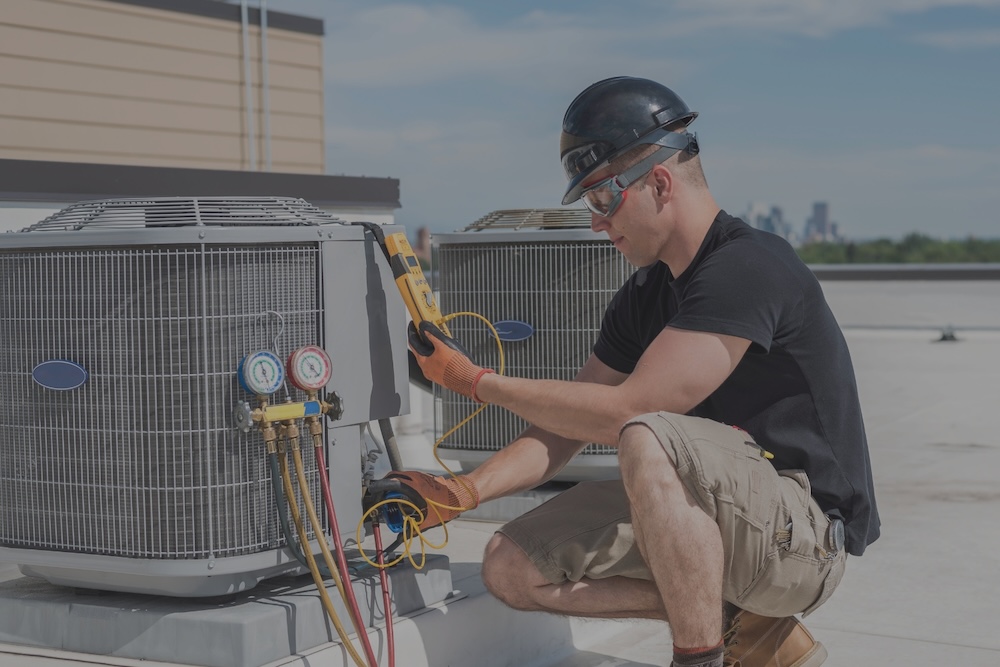
Commercial HVAC maintenance means servicing your building’s heating, ventilation, and cooling equipment on a planned schedule so it runs efficiently, lasts longer, and doesn’t fail when you need it most.
At minimum, that means two professional visits a year, spring and fall, plus routine filter and monitoring tasks in between. At CFBI Commercial, our inspectors walk hundreds of commercial rooftops and mechanical rooms across Central Florida, and the same neglected systems show up again and again.
This guide covers what proper maintenance includes, how often it’s really needed, the parts of the system owners forget, and what an inspector notices that a quick service call often misses.
What Does HVAC Maintenance for Commercial Buildings Actually Include?
A complete commercial HVAC maintenance program combines daily monitoring, scheduled preventive service, and seasonal professional visits. It isn’t one annual checkup. It’s a layered routine that catches small problems before they become capital expenses.
A typical scope covers these core tasks:
- Filters: inspect and replace on a set schedule, more often in dusty or high-occupancy buildings
- Coils: clean evaporator and condenser coils so the system can actually move heat
- Refrigerant: check charge levels and look for leaks
- Electrical: tighten connections, test contactors, and check safety switches
- Moving parts: lubricate motors and bearings, check and adjust belts
- Drainage: clear condensate lines and drain pans to prevent water damage and mold
- Controls: verify thermostat calibration, sensors, and system staging
- Airflow: measure and confirm the system is delivering designed airflow
Modern commercial equipment can contain more than a hundred interconnected parts, so a real maintenance visit follows a written checklist rather than a quick look.
The national reference point here is ANSI/ASHRAE/ACCA Standard 180, which sets minimum inspection and maintenance requirements for commercial building HVAC systems.
If a service provider can’t tell you what standard they follow, that’s worth asking about.
How Often Should Commercial HVAC Be Serviced?
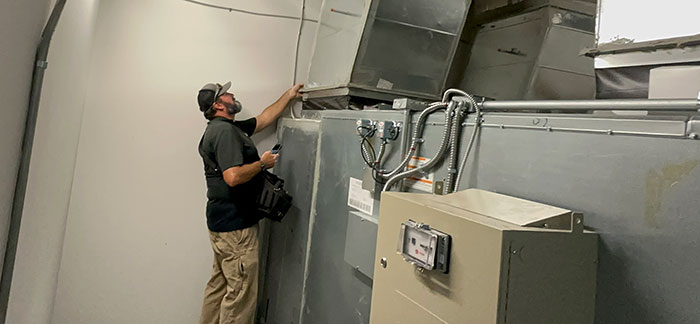
Most commercial HVAC systems should be professionally serviced at least twice a year: once in spring before cooling season and once in fall before heating season. For many buildings, that’s the floor, not the ceiling.
Several factors push a building toward quarterly or even monthly service:
- Long run hours. Most commercial buildings run their equipment ten or more hours a day, five to seven days a week. That’s far more wear on compressors, fans, and belts than a home system ever sees.
- Building type. Restaurants generate heat and airborne grease that clog coils and filters fast. Medical, dental, and childcare facilities have stricter ventilation and filtration needs. Data centers and manufacturing plants often run around the clock.
- Equipment age. Older systems need closer attention, and rooftop packaged units common in commercial settings typically last 15 to 20 years before replacement.
- Local climate. In Central Florida, near-constant cooling load and high humidity mean systems work hard most of the year, with little of the seasonal rest a northern building gets.
The honest answer is that frequency depends on the building. A qualified technician who evaluates equipment type, age, runtime, and operating conditions can recommend the right interval for your property.
The Parts of the System Owners Forget
Filters and coils get attention because they’re familiar. The components that cause the most expensive surprises are the ones nobody thinks about until they fail.
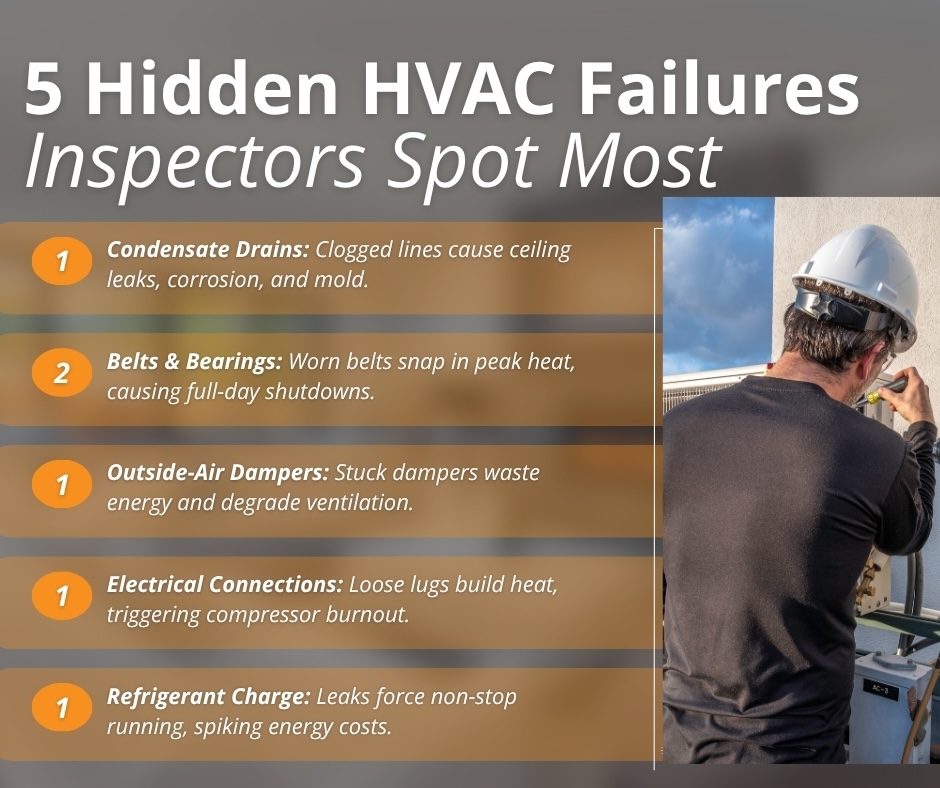
Condensate drains. In a humid climate, a clogged condensate line backs up fast. We regularly find water-stained ceiling tiles and corroded drain pans directly under air handlers, quiet damage that was months in the making.
Belts and bearings. On older units that still use belts to drive fans, a worn belt is cheap to replace and expensive to ignore. A snapped belt on a hot afternoon can take a rooftop unit offline for a full business day.
Economizers and outside-air dampers. These controls bring in fresh air and can save real money when they work. Stuck open or stuck closed, they quietly waste energy or starve the building of ventilation, and almost nobody checks them.
Electrical connections. Vibration loosens connections over time. Loose lugs run hot, and heat is what burns out contactors and compressors. Tightening and testing connections is a two-minute task that prevents four-figure repairs.
Refrigerant charge. A system low on refrigerant doesn’t just cool poorly. It runs longer, uses more energy, and wears the compressor. Low charge usually means a leak, and a leak only gets worse.
An Inspector’s Take: What Maintenance Records Reveal
There’s a difference between a building that gets serviced and a building that gets maintained. As commercial inspectors, we see it in the paperwork and in the equipment itself.
During a property condition assessment, HVAC is one of the major systems we evaluate, and one of the most common sources of large capital surprises. A rooftop unit at the end of its service life can be a five-figure replacement.
Whether it’s near failure or has years left often comes down to how it was maintained.
Here’s what a maintenance history tells an inspector:
- Consistent, dated service records signal a system likely to reach or exceed its expected lifespan.
- Gaps in the record suggest deferred maintenance, and deferred maintenance compounds. A skipped coil cleaning becomes a strained compressor becomes an early replacement.
- Repeated repairs on the same unit point to a system nearing end of life, not one that just needs one more fix.
For buyers, this matters during due diligence. A well-documented HVAC system supports the asking price. A poorly documented one is a negotiating point and a budgeting line item. This is also why maintenance responsibility is worth nailing down before signing a triple net lease, where the tenant often carries HVAC upkeep and the associated costs.
Why Skipping Maintenance Costs More Than It Saves
Deferred HVAC maintenance is one of the most expensive ways to save money. When routine service is skipped, small issues build quietly until they force an emergency call.
The costs stack up in four ways:
- Higher energy bills. Dirty coils, clogged filters, and low refrigerant make the system work harder for the same output. The federal Better Buildings program highlights preventive maintenance specifically as a way to save energy and extend equipment life.
- Shorter equipment life. Well-maintained units can last years longer than neglected ones. Replacing a rooftop unit early is a capital expense that planning could have deferred.
- Emergency repairs and downtime. A failure during peak season interrupts business, and emergency service costs more than scheduled work.
- Voided warranties. Many manufacturers require documented maintenance to keep the warranty valid. Skip it, and a covered repair can become your bill.
Poor maintenance also degrades indoor air quality, which affects occupant comfort, health, and in regulated facilities like healthcare and food service, compliance.
Related Questions to Explore
How much does commercial HVAC maintenance cost?
Cost depends on the number of units, equipment type, and building size, so most providers quote per property rather than by a flat rate. The more useful comparison is against the alternative: a maintenance plan is almost always a fraction of an emergency repair or an early system replacement.
Are maintenance agreements on commercial HVAC a good idea?
For most buildings, yes. A service agreement keeps the twice-yearly schedule on track, often includes priority response, and produces the documented record that protects warranties and property value. Buildings on a plan tend to see fewer failures and fewer emergency calls.
How do maintenance contracts for commercial HVAC systems work?
A provider evaluates your equipment and proposes a schedule, usually two to four visits a year, covering inspection, cleaning, and testing. Plans range from inspection-only to full coverage that includes repairs. The right structure depends on building use and how critical uptime is.
How long do commercial HVAC systems last?
Rooftop packaged units common in commercial buildings typically last 15 to 20 years. Maintenance is the biggest variable within that range, and a well-cared-for unit can outlast a neglected one by several years.
Does maintenance frequency change for restaurants or medical offices?
Yes. High-heat, high-grease, high-occupancy, or strict-ventilation environments usually need quarterly service instead of twice a year, because they place heavier and faster wear on the equipment.
When to Call a Professional
Some tasks, like checking that filters are being changed and watching for unusual noises or smells, an on-site facilities person can handle.
Most of a commercial maintenance visit cannot be done safely or accurately without training and instruments. Refrigerant handling, electrical testing, coil cleaning, and airflow measurement all require a licensed technician.
Call a professional when you notice strange noises or odors, uneven temperatures across the building, a spike in energy bills, water pooling near an air handler, or a system that short-cycles or struggles to keep up. Those are early warnings, not minor quirks.
If you’re buying, leasing, or refinancing a commercial property, that’s the moment to bring in a commercial inspector rather than only a service contractor.
CFBI Commercial serves Orlando and the greater Central Florida area, and our HVAC evaluation within a full property condition assessment tells you not just whether the system runs today, but how much life and risk it carries for your investment.
Conclusion
Commercial HVAC maintenance protects three things at once: your equipment, your operating budget, and your building’s value.
- Service most systems at least twice a year, more for heavy-use or specialized buildings.
- Don’t overlook the quiet components: drains, belts, dampers, electrical connections, and refrigerant charge.
- Treat the maintenance record as an asset. It’s the difference between a system that lasts and one that surprises you.
If you’re evaluating a commercial property or want a clear-eyed read on its HVAC and other major systems, schedule a property condition assessment with CFBI Commercial. Our inspectors give you the knowledge to make a confident, well-budgeted decision.